Showing posts with label mental health. Show all posts

Thursday, February 4, 2021

Zero Reasons Why

Zero Reasons Why is a teen led story campaign and community mobilization effort to prevent teen suicide. 

I had heard about this organization but really didn't know much about it. Of course, I'm not a teen nor do I have teenage kids so there really isn't much reason why it would pop up on my radar. It did today though. A friend shared a post on facebook that stated teen suicide was down in Johnson County during 2020. Zero Reasons Why was mentioned in the article she linked to her post. According to Elizabeth Holzschuh, the county’s epidemiology director, some of the decline could be attributed to suicide prevention efforts by the county mental health center and Zero Reasons Why.

The group's initiative is having an impact letting teens know "it’s ok to not be ok". They’re reaching out for help, but they’re maybe not getting to that point of attempting or completing suicide. In the article Kessler (Kyle Kessler, executive director of Association of Community Mental Health Centers of Kansas, Inc) said ZRW’s impact can be seen in the state’s suicide numbers among people ages 15 to 24, which decreased for the first time in 2019 by 18%. That is great news! 

Zero Reasons Why, created in 2018 by Johnson County teens and the Mental Health Center, is working to expand its reach to the entire Kansas City metro area. They had to adapt to accommodate COVID-19, which meant engaging with the community virtually instead of in-person. Keeping that in mind, they will continue to provide virtual opportunities in 2021. 

Below is a look at the 2021 committee goals are for 2021:

  • The events committee is looking to hold virtual events as well as events for students to implement in their own schools. A wellness rock garden is one of the committee’s ideas, in which students would work together to raise mental health awareness and spread kindness.
  • In an effort to get youth involved earlier, the middle school committee is looking into connecting with middle school principals so ZRW can speak to students.
  • The content committee will be working on spreading awareness with 12 topics that will be highlighted on ZRW’s Instagram for one week each month this year. January’s focus was mental health myths, and February’s topic will be racism.
  • ZRW’s convening committee is working to ensure the campaign’s message reaches across demographics and wants to increase participation and attendance.
  • Similar to the middle school committee, the marketing committee will also focus on working with eighth graders this year. During mental health awareness week — the first full week of October — the committee will roll out interactive, online activities.
  • The orientation committee is aiming to compile a guide for new members, which may include pairing new members with an existing member to help them along the way.

I don't know about you, but I think it is cool there is a teen oriented organization working to reduce suicide in young people. If you want to learn more about Zero Reasons Why visit them on facebook or online.

Friday, February 16, 2018

Goings on....

I can't believe I haven't posted in here for over a year! I have a suicide prevention blog on wordpress and post on there daily so I guess it's fair to say I am neglecting this blog. The events of the past few weeks have me thinking though... 

Why is it when a mass shooting or other tragedy in the community occurs people are quick to say it must be due to mental illness? Are you aware that the majority of people who struggle with a form of mental illness are not violent? In fact, most acts of violence are committed by people with anger issues and they have not been previously diagnosed with a mental illness (or mental health issue as I prefer to call it). Violence is not a product of mental illness. Nor is violence generally the action of ordinary, stable individuals who suddenly “break” and commit crimes of passion. Violent crimes are committed by violent people, those who do not have the skills to manage their anger.

Here's a good article that explains this concept better than I can:  http://www.slate.com/articles/health_and_science/medical_examiner/2014/04/anger_causes_violence_treat_it_rather_than_mental_illness_to_stop_mass_murder.html.  

I hope we live in a world one day where mental illness is not automatically blamed for every act of violence that occurs. Mental health is very misunderstood. Let's educate and be more compassionate. People are afraid to ask for help because they fear being ostracized by society because people don't have an understanding about mental health/illness and honestly don't try to understand unless they have a loved one affected by mental health issues. 

Friday, May 1, 2015

May is Mental Health Awareness Month

May 1st marks the first day of Mental Health Awareness Month, a time dedicated to breaking down stigma, raising awareness, and letting people know they are not alone and there is help. 


Monday, February 23, 2015

Strength

We don't always have to be strong to be strong. Sometimes our strength is expressed in being vulnerable. Sometimes, we need to fall apart to regroup and stay on track.

We all have days when we cannot push any harder, cannot hold back self-doubt, cannot stop focusing on fear, cannot be strong.

There are days when we cannot focus on being responsible. Occasionally we don't want to get out of our pajamas. Sometimes, we cry in front of people. We expose our tiredness, irritability, or anger.

Those days are okay. They are just okay.

Part of taking care of ourselves means we give ourselves permission to "fall apart" when we need to. We do not need to be perpetual towers of strength. We are strong. We have proven that. Our strength will continue if we allow ourselves the courage to feel scared, weak, and vulnerable when we need to experience those feelings.

The above excerpt is from The Language of Letting Go by Melody Beattie. I thought it was an appropriate topic for today. Today is the 3 year anniversary of my devastating fire where I lost everything, including my kitty Cosmo. Although my feelings aren't as strong today as they were 2 years ago when I literally fell apart at the one year anniversary, I still have strong feelings about February 23. It's a day that changed my life.

Much has changed in my life since that day. I have adopted another kitty to keep my survivor kitty CJ company. I have changed jobs, I have lost friends and gained new ones. I have fallen apart. I have picked myself back up.  I have found the strength to continue life even when life seems unbearable.

I still have nightmares from my 2 fires in 2012. In fact, I had one last night that woke me up. I wasn't sure I would want to get out of my pajamas today, much less go to work. I didn't want fear to paralyze me though so I got up, got dressed, drove to work and if not for the computers going down I might have had a productive day today. I could have let the computer issue bother me. Instead, I used the time to read blogs, catch up on facebook, review email... all from my smart phone. (What did we do before smart phones?) I may not be as strong as I want to be, but at least I am coping now rather than letting fear paralyze me any longer. The bravest thing I did was ask for help. The day I asked for help is a painful memory but because I was brave enough to ask for help, I am alive to create new memories.

Sometimes, we need to fall apart to regroup and stay on track... 

If you or a loved one are struggling, there is help. Reach out to a friend, family member, significant other, teacher, coach, coworker... anyone you feel safe talking to. The bravest thing you can do is ask for help. Asking for help is not a sign of weakness, it's a sign of being strong for too long. Help is available. You do not need to be suicidal to call the lifeline. The lifeline is there for anyone who is struggling.


Friday, October 31, 2014

21 Comics that Capture the Frustration of Depression…


21 Comics That Capture The Frustrations Of Depression


For those who have suffered, are suffering, or simply want to learn more.       Posted on Sept. 19, 2013, at 1:13 p.m. by Heben Nigatu - BuzzFeed Staff
[Editor’s note: This is by no means a definitive list. The comics featured here can not and do not represent everyone’s experiences. But there are some things they do capture. Part of the difficulty of depression is that it is a pain that is unnameable. Sometimes, art is the best way to capture the things we do not know how to say.]

Thursday, October 16, 2014

Lost Minds: KC's Mental Health Crisis

A very good documentary showing how Kansas City Police Department is trying to help those in crisis receive the help they need rather than a trip to jail. Other local police agencies could learn from this example. Thank you KCPD!


Wednesday, September 10, 2014

The Moments That Change You

Here is the third post I want to share this week in support of Suicide Prevention Awareness Week:

Heidi Bryan: The Moments That Change You

Heidi Bryan
I believe most of us have had flashes of insight or epiphanies and know their impact on our lives. I’ve had two, and they have truly changed me.
The first was after my older brother’s suicide. I was talking with a friend when it hit me. Just as alcoholism “talks” to you, tells you one drink won’t hurt or you’re not really an alcoholic, so do other diseases like bipolar disorder, depression, or being suicidal. Only these diseases tell you that you’ll be doing everybody a favor, they’ll get over it, or it will be such a relief for other people not to have you weighing them down.
I bet this is what my brother was thinking when he killed himself, and you know what? He was wrong. We won’t get over it, and he wasn’t doing us a favor. How do I know this? These were my thoughts, too. Six weeks before his death I was planning my own suicide. I had a plan and a back-up plan and a back-up plan to the back-up plan. I was waiting for the opportunity to present itself. But his death changed all of that.
So it hit me: “If he was wrong, and it’s not true for him, that it was his disease talking to him, then it’s not true for me.” I didn’t feel it, or think it, or believe it, but I now had the evidence in front of me and I knew it to be true; suicide was no longer an option.
Flash forward five years. I’m in therapy, I’m on medication, and I’m doing much, much better. In fact, I like life and living. So it was a typical evening and I was watching the TV show “Boomtown,” a short-lived but very good show set in Los Angeles that examined crime from every viewpoint — police, witnesses and even the criminals. Donnie Wahlberg plays a police officer whose wife had attempted suicide recently. In the episode that night, he came home but he didn’t see his wife right away. He raced through the house and opened the bathroom door — where he had found her when she had attempted suicide— and she was taking a bubble bath. She turned to look at him and immediately saw the panicked look on his face. She turned her face to the wall.
I couldn’t get the scene out of my mind. I went to therapy that week and my therapist had also seen the show. He thought she turned away in anger, but I told him that no, it was shame.
On the way home it hit me. I remembered a time when I talked to my therapist on the phone when I was agitated, upset and suicidal, and I hung up on him. I called him back, but still. Then I thought of my husband. Did he ever come home and not find me right away and get scared? Emotions flooded me and I thought, “How could you have put them through this? How scared they must have been. How horrible it must have been!”
I went to work the next day and asked my husband to meet me for lunch. Crying, I told him about the show, my realization, and how sorry I was to put him through that. He said that it was OK; it was just that one time. During my next therapy session, I told my therapist everything and apologized to him. He said he believed I would always carry that realization with me, and he was right. I’ll never forget those feelings and never want to put anybody through that again.

If you or someone you know is struggling please reach out. Help is available!


Tuesday, September 9, 2014

Rascal Flatts: Someone You Know May Need A Friend

Here is the second post I want to share this week in support of Suicide Prevention Awareness Week:

Rascal Flatts: Someone You Know May Need A Friend


This post was submitted to the 100 Voices for Suicide Prevention campaign by the The Jason Foundation, Inc. External link (JFI), an educational organization dedicated to the awareness and prevention of youth suicide through educational programs. JFI is a national organization with a network of affiliate offices. Go tojasonfoundation.com to learn more.

Rascal Flatts and The Jason Foundation, Inc. created the B1 Project in 2010 as a new program to aid in the prevention of youth suicide.
Did you know that the 2nd most likely thing to take a young person is suicide? Yet, no one ever talks about it until a tragedy occurs. That’s why The Jason Foundation and Rascal Flatts call youth suicide “The Silent Epidemic”.
B1 is designed to be quick, informative, and target the most important aspects of youth suicide prevention. Participating in the B1 Pledge is a proactive step towards taking some of the silence out of the “Silent Epidemic”. B1 will help you to recognize warning signs and develop a plan of action to help someone who may be struggling.
If a young person looks to you for help—are you ready to B1 for them?
Gary LeVox, Jay DeMarcus and Joe Don Rooney, the members who make up Rascal Flatts, have been involved in many philanthropic and charitable endeavors throughout their career and believe in the gift of giving back.
In addition to their roles as Celebrity Ambassadors for The Jason Foundation and participation in public services announcements, public awareness programs, and fundraising; Rascal Flatts promote the B1 Project.

Rascal Flatts PSA


If you or someone you know is struggling please reach out. Help is available!

Monday, September 8, 2014

Today kicks off National Suicide Prevention Week...

Mental Health and particularly suicide is not a topic many feel comfortable talking about. That needs to change! Every 40 seconds the world loses someone to suicide. The World Health Organization estimates that nearly 800,000 people die by suicide each year. Chances are you know someone who has died by suicide. This year alone I know of 4 friends and/or acquaintances that have died by suicide not including actor Robin Williams. It's hard enough to lose someone you know to suicide, it's even harder when you are struggling with depression as I am. It's a battle. There are good days and not so good days. I have found that talking about it helps. I also have learned though that you have to be careful who you talk to. Not everyone has your best interest in mind. I don't want to dwell on that though because seeking help is truly the best way to prevent suicide!

The University of Southern California School of Social Work started a collaboration with experts in the mental health field to create the "100 Voices for Suicide Prevention" campaign.  Every day this week I am going to share on my blog a posting submitted to the 100 Voices for Suicide Prevention campaign.  

Here is the submission I would like to share today:

   This post was submitted to the 100 Voices for Suicide Prevention campaign by Badge of Life, a group of active and retired police officers, medical professionals and surviving families of suicides from the United States and Canada. The cornerstone of our Badge of Life program is an entirely new approach to suicide prevention, called the “Emotional Self-Care Program External link” (ESC).

Badge of life
The world of depression and suicide is a dark, murky one that’s hard for “outsiders” to understand. No one truly wants to die—that defies the human instinct to survive and continue on. Depression is a heaviness that suffocates, that darkens the sun and casts the person into a seemingly eternal, turbulent night. Suicide, which is depression out of control, is akin to standing on a burning floor in the World Trade Center. The floors below you are consumed and the flames are licking at your back as you stand at the window. You have only one of two choices—to either burn a slow and terrible death or jump from the window to escape the pain. That’s what suicide is—an attempt to escape a pain that seems as bad as burning in a gasoline fire for eternity. Standing at ground level, how would you judge this person? You have no such right—because you’re not standing on the window ledge hearing the screams behind you and feeling the flames licking at your back.
The one thing that is hard for the suicidal person to understand is that there really is refuge from the pain. To communicate this calls for compassion, empathy, and an effort to assure the person that they are not alone. This is best accomplished by showing the person you understand the dynamics of depression and suicide and that you realize suicide seems, for the moment, to be the “only way” to escape the pain of what is troubling them. Above all, let the person talk. Do not label or judge the person.
Do not be afraid to use words like, “caring,” “loving” and “accepting.” The right words are important, and allow them to show in your voice. It is imperative that the person understand that, regardless of what has brought them to this stage, they can survive it and be cared for in a compassionate way by others who have “been there” and/or who dedicate their lives to helping others.
As one psychologist put it, “There is no such thing as no hope.” Let the suicidal person know that there is not only hope, but that their life is important to you. Avoid saying things like, “You have so much to live for,” “Your suicide will hurt your family” or, worse, “Look on the bright side.” Stay away from patronizing statements like, “Suicide is a permanent solution to a temporary problem.” These only open up arguments. Again, empathy and the offer of caring, professional help are crucial.
If a peer support officer is available, take advantage of them either directly or in an advisory capacity. These officers are also trained in the symptoms of suicide and how to talk with a potential victim.
Most importantly, listen. Allow the person to vent their emotions, fears and anger and encourage them to talk about their motives for suicide. Time is on your side. If they show any openness to alternatives, take advantage of it and keep them talking about them. Remember, the suicidal person often feels cornered, trapped and isolated. Your job is to help them feel included–and part of the solution.


If you or a loved one is hurting please reach out. Asking for help is the hardest thing to do but so worth it!


Friday, August 15, 2014

Volunteering Makes You Happier – Here’s Why

Recently came across an interesting article about volunteering and had to share:


When researchers at the London School of Economics examined the relationship between volunteering and measures of happiness, they found the more people volunteered, the happier they were. - Simple Changes, Big Rewards: A practical, easy guide for healthy, happy living. 

While there are many factors that lead to happiness, research proves that volunteering definitely makes people happier (and even healthier).

So why does volunteering make you happier?

Research shows that volunteering will help you live longer, and that should be cause enough to make you happy. But there are other reasons as to why volunteering makes you happier… here are 3 leading theories as to why:
 1. Giving Time Makes You Feel That You Have More Time
“Not having enough time” is considered one of the biggest stressors and detractors of happiness. However, the feeling of having more time lower stress.
 A long line of empirical research, including one study of over 2,000 people, has shown that acts of altruism—giving to friends and strangers alike—decrease stress and strongly contribute to enhanced mental health.
While not necessarily intuitive, giving your time to others will likely benefit you as much as any other party. A study from Harvard Wharton, and Yale, ‘Giving Times Gives You Time, summarizes the benefits nicely:
Happier people give more and giving makes people happier, such that happiness and giving may operate in a positive feedback loop (with happier people giving more, getting happier, and giving even more).
Counter-intuitive as it may be, volunteering increases your perception of how much time you have, and lowers your stress in the process.

 2. Volunteering Creates Social Bonds That Make You Feel Loved
Social relationships are described as ‘perhaps’ the ‘greatest single cause’ of happiness. - Michael Argyle, The Psychology of Happiness
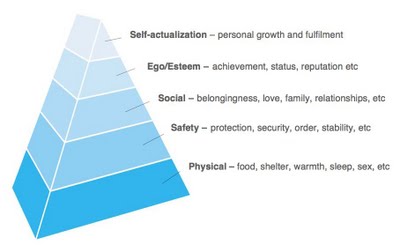
MaslowHierarchyofNeedsIn 1943, Maslow released his groundbreaking research that we now know as the “Hierarchy of Needs”. In it, he hypothesized that after safety, the thing that people need most is “Emotional Belonging”
According to Maslow, humans need to feel a sense of belonging and acceptance among their social groups, regardless if these groups are large or small.
Spending time volunteering creates bonds with fellow volunteers, organizations hosting volunteers, and the beneficiaries. The social bonds created during volunteering contribute directly to feelings of belonging.
According to research from University of Minnesota,  volunteering also creates social capital which leads to more interaction, engagement, and trust with the people that you volunteer with.
“We must cultivate the science of human relationships – the ability of all people, of all kinds, to live together and work together.” —Franklin D. Roosevelt
 3. Volunteering Extends Empathy; Empathy Leads to Life Satisfaction
Jeremy Rifkin, a best-selling author, has a wildly popular video and book called ‘The Empathic Civilization‘. He argues that the only way we can truly create a sustainable and healthy planet is by extending empathy across borders. By doing so, he explains that you will create relationships which ultimately lead to happiness.
When people go Experteering through MovingWorlds, they consistently report that “creating new friendships” and “spending time with locals” are some of the biggest contributors to positive experiences while volunteering their skills overseas.
In the “6 Habits of Highly Empathic People“, Roman Krznaric shares that empathy creates the social glue that will hold our societies together, and that 98% of people have the ability to be empathic. His research shows that of all people, the most empathic are also committed to social change
Highly Empathic People understand that empathy can also be a mass phenomenon that brings about fundamental social change.
By engaging in social change, Roman quotes happiness guru Martin Seligman who identifies empathy as a key character strength that can enhance life satisfaction, and with it, happiness. 
living-a-happy-life
Volunteering always makes me feel better. It quite often is a positive coping mechanism for me when I am feeling down. There isn't anything quite like the feeling of helping someone or something in need. I enjoy volunteering for several organizations: American Red Cross, Wayside Waifs, SW Johnson County CERT and United Way. There are so many great organizations to volunteer for! If you would like to volunteer but are not sure where to begin, here is a good resource: Volunteer Match - http://www.volunteermatch.org/. By submitting your interests you can find an organization that best fits your interests as well as a non-profits needs. Get out there and make a difference in your life and others!

Wednesday, August 13, 2014

Depression doesn't discriminate.

Unless you've been living under a rock the past 24 hours you know by now that Robin Williams took his life yesterday. I have to admit, I am disappointed with the media. There is no good reason to report how Robin Williams took his life. Providing details of the how hurts the surviving family and friends who don't need to hear the details of how over and over again. The how also can be a trigger to those who have lost a loved one to suicide. It can also be a trigger for those who may be having suicidal thoughts. Their minds are already vulnerable. Hearing how someone took their life may be enough of a trigger for them to follow through with their suicidal thoughts. I also found it disappointing that media didn't take the opportunity to include resources for suicide prevention in their stories. It was a platform to help those who might need it and the media failed to take advantage of the opportunity. I posted on some of the news sites to please report responsibly when reporting about suicide. My post probably fell to deaf ears but I had to try. If we can't help someone, at least don't hurt them! I felt like the news didn't do anything to help and only led to the possibility of hurting people.

It wasn't a secret that Williams struggled with alcohol and drug abuse, going to rehab more than once. What most of us probably didn't know was that Robin Williams was struggling with depression. That's the problem with depression, it doesn't discriminate. It doesn't care if you are rich, poor, successful, young or old, anyone is susceptible to depression. It often leads to isolation. And trust me, when you isolate you are much less likely to ask for help! Been there, done that... Robin Williams used humor to bring others happiness. I am willing to bet he used humor as a coping mechanism. And why not? Laughter is good for the soul! But sometimes those who smile the brightest are hurting the most. They just learn how to mask it better than the rest of us.  

When we reach the point we can't cope with our depression something has to give. Suicide is not chosen; it happens when pain exceeds resources for coping with pain.

If you are suicidal please hang on and ask for help. There are resources out there to help you! You can survive suicidal feelings if you do either of 2 things: 1) find a way to reduce your pain or 2) find a way to increase your coping resources. Both are possible!

Here are 5 things to think about if you are feeling suicidal:
  1. You need to know that people do get through this - even people who feel as badly as you are feeling right now. 
  2. Give yourself some distance. Say to yourself, "I will wait 24 hours before I do anything." Remember that feelings and actions are 2 different things - just because you feel like taking your life, doesn't mean that you have to actually do it right this minute. Put some distance between your suicidal feelings and suicidal action. 
  3. People often turn to suicide because they are seeking relief from pain. Remember that relief is a feeling. And you have to be alive to feel it. You will not feel the relief you so desperately seek if you are dead. I know that sounds harsh but it's true. 
  4. Some people will react badly to your suicidal feelings, either because they are frightened or angry. But there are people out there who can help you in this horrible time, and will not judge you or argue with you or send you to a hospital or try to talk you out of how badly you feel. They will simply care for you. Find one of these people. Use your 24 hours and tell someone what's going on with you. It is ok to not be ok. It's also ok to ask for help! Don't give yourself the additional burden of trying to cope alone. Just talking about how you got to where you are releases an awful lot of the pressure and it might be just the additional coping resource you need to regain your balance.
  5. Suicidal feelings are, in and of themselves, traumatic. After they subside, you need to continue caring for yourself. There are many positive coping mechanisms such as therapy, self help groups, books, forums on the internet, etc.
If you are struggling, please reach out to someone...a friend, family member, teacher, pastor, coworker...anyone! People really do want to help! It's hard sometimes to talk to family or friends when you are hurting and need help. There are resources available such as the National Suicide Prevention Lifeline. Call them at 1-800-273-8255. You can remain anonymous. They are there to listen and help. You do not need to be suicidal to call. They also have a chat feature if you prefer that instead of calling. Visit them online at: http://www.suicidepreventionlifeline.org/.  If you are struggling and need to talk, they are there to listen and to help you with resources. Help is available!  


Robin Williams will be remembered for his many roles on and off screen. He brought smiles to many. Let's remember Robin Williams for how he lived rather than how he died. But please use his death as a reminder that people do hurt and do need help. Reach out to someone today. You might be the only one who does. It could very well save their life!

"No Matter What People Tell You, Words and Ideas Can Change the World." - Robin Williams.

RIP Robin Williams